Category: Insurance

  • Uncover the Secrets to Affordable Life Insurance: A Guide to Cheap Life Insurance Quotes

    Uncover the Secrets to Affordable Life Insurance: A Guide to Cheap Life Insurance Quotes

    Embark on a journey to discover the world of cheap life insurance quotes, where affordability meets peace of mind. Dive into a comprehensive exploration of life insurance options, empowering you to make informed decisions that safeguard your loved ones without breaking the bank.

    From comparing quotes across multiple insurers to understanding the nuances of life insurance riders, this guide will equip you with the knowledge to navigate the complexities of life insurance and secure the best coverage for your unique needs.

    Affordable Life Insurance Coverage

    Cheap life insurance quotes

    In today’s uncertain world, securing your family’s financial future is paramount. Affordable life insurance provides peace of mind, knowing that your loved ones will be protected in the event of your untimely demise. With a wide range of options available, finding cheap life insurance that meets your specific needs is within reach.

    The cost of life insurance premiums is influenced by several factors, including your age, health, lifestyle habits, and the amount of coverage you need. Understanding these factors can help you make informed decisions and potentially reduce your costs.

    Factors Influencing Life Insurance Premiums

    • Age:As you age, your risk of health issues increases, leading to higher premiums.
    • Health:Your overall health and medical history play a significant role in determining your premiums. Pre-existing conditions can increase your risk and, consequently, your costs.
    • Lifestyle Habits:Engaging in risky behaviors, such as smoking or excessive alcohol consumption, can raise your premiums.
    • Amount of Coverage:The higher the coverage amount you need, the more you’ll pay in premiums.

    Tips to Reduce Life Insurance Costs

    • Compare Quotes:Obtain quotes from multiple insurers to compare rates and find the best deal.
    • Consider Term Life Insurance:Term life insurance provides coverage for a specific period, often at a lower cost than whole life insurance.
    • Improve Your Health:Maintaining a healthy lifestyle, including regular exercise and a balanced diet, can improve your health rating and reduce premiums.
    • Quit Smoking:Smoking significantly increases your risk of health problems, leading to higher premiums. Quitting can save you money on insurance.
    • Increase Your Deductible:Choosing a higher deductible on your policy can lower your premiums.

    By understanding the factors that influence life insurance premiums and implementing cost-saving strategies, you can secure affordable coverage that meets your needs without breaking the bank.

    Comparing Quotes from Multiple Insurers

    Securing affordable life insurance coverage is a crucial step in safeguarding your loved ones’ financial future. To ensure you make an informed decision, it’s essential to compare quotes from various insurance providers. This comprehensive guide will empower you with the knowledge and strategies to gather, compare, and select the most suitable life insurance policy that meets your unique needs and budget.

    Gathering Life Insurance Quotes

    The first step in comparing quotes is to gather them from multiple insurance providers. You can do this by:

    • Online Quote Comparison Tools:Utilize online platforms that allow you to compare quotes from several insurers simultaneously.
    • Insurance Brokers:Consult with an independent insurance broker who represents multiple insurers and can provide unbiased advice.
    • Direct Contact:Reach out to individual insurance companies directly to request quotes.

    Comparing Life Insurance Quotes

    Once you have gathered quotes from different insurers, it’s time to compare them carefully. Consider the following factors:

    • Coverage Amount:Ensure the coverage amount is sufficient to meet your family’s financial needs in the event of your untimely demise.
    • Premiums:Compare the monthly or annual premiums charged by each insurer. Remember, lower premiums don’t always indicate a better deal.
    • Policy Terms:Understand the policy terms, including the length of the coverage, the waiting period, and any exclusions or limitations.
    • Riders and Benefits:Consider additional riders or benefits, such as accidental death benefits or disability income riders, that may enhance the coverage.
    • Financial Strength of the Insurer:Research the financial stability and reputation of each insurance provider to ensure they have the ability to fulfill their obligations.

    Advantages and Disadvantages of Different Insurers

    Each insurance provider offers unique advantages and disadvantages. Some insurers may specialize in certain types of life insurance policies, while others may offer competitive premiums or comprehensive coverage options. By understanding the strengths and weaknesses of different insurers, you can make an informed decision that aligns with your specific requirements.

    Understanding Life Insurance Riders and Benefits

    Seniors affordable

    Life insurance riders are optional add-ons that can enhance the coverage of your policy and provide additional benefits. They offer a range of options to tailor your policy to your specific needs and circumstances.

    Types of Life Insurance Riders

    There are several types of life insurance riders available, each providing unique benefits. Some common riders include:

    • Accidental Death Benefit:Provides an additional payout if the insured person dies as a result of an accident.
    • Critical Illness Coverage:Provides a lump sum payment if the insured person is diagnosed with a covered critical illness, such as cancer or heart disease.
    • Waiver of Premium:Exempts the insured person from paying premiums if they become disabled and unable to work.
    • Return of Premium:Refunds a portion or all of the premiums paid if the insured person outlives the policy term.
    • Child Rider:Provides coverage for the insured person’s children.

    Benefits and Drawbacks of Riders

    Adding riders to your life insurance policy can provide valuable benefits. However, it is important to consider the potential drawbacks as well:

    Benefits:

    • Increased coverage and financial protection
    • Tailored coverage to meet specific needs
    • Peace of mind knowing that loved ones are protected

    Drawbacks:

    • Increased premiums
    • Potential restrictions or limitations on coverage
    • May not be necessary for all individuals

    Table of Common Riders and Impact on Premiums

    The following table Artikels some of the common riders offered by insurers and their impact on premiums:

    Rider Benefit Impact on Premium
    Accidental Death Benefit Additional payout for accidental death Increases premium by 10-20%
    Critical Illness Coverage Lump sum payment for covered critical illness Increases premium by 15-25%
    Waiver of Premium Exemption from premium payments if disabled Increases premium by 5-10%
    Return of Premium Refund of premiums if insured outlives policy term Increases premium by 10-15%
    Child Rider Coverage for insured person’s children Increases premium by 5-10% per child

    Applying for Cheap Life Insurance

    Cheap life insurance quotes

    Obtaining affordable life insurance is crucial for safeguarding your loved ones’ financial well-being. Applying for cheap life insurance involves a straightforward process, but meticulous preparation can enhance your chances of securing favorable rates.

    Required Information and Documentation

    • Personal information: Name, address, date of birth, Social Security number
    • Health history: Medical conditions, medications, surgeries, lifestyle habits
    • Financial information: Income, assets, debts
    • Beneficiary information: Name, relationship, percentage of coverage
    • Proof of insurability: Medical exam, doctor’s report, prescription records

    Steps to Apply

    1. Gather information:Collect the necessary information and documentation Artikeld above.
    2. Compare quotes:Obtain quotes from multiple insurers to find the most affordable options.
    3. Choose a policy:Select the policy that best meets your needs and budget.
    4. Complete the application:Provide accurate and complete information on the application form.
    5. Submit the application:Send the completed application along with supporting documentation to the insurer.
    6. Underwriting process:The insurer will review your application and determine your risk level.
    7. Approval and policy issuance:If approved, the insurer will issue your life insurance policy.

Tips for Securing Affordable Rates

  • Maintain a healthy lifestyle: Non-smokers and individuals with good health habits typically qualify for lower rates.
  • Compare multiple quotes: Shopping around can help you find the most competitive rates.
  • Consider a smaller policy: A lower death benefit amount can result in lower premiums.
  • Increase your coverage gradually: Starting with a smaller policy and gradually increasing coverage as your financial situation improves can help keep costs manageable.

Additional Considerations for Cheap Life Insurance

To secure cheap life insurance quotes, it’s crucial to consider factors that influence premium costs. Medical exams and health screenings play a significant role in assessing your health profile, impacting the insurer’s risk assessment. Age, lifestyle habits, and family history also come into play.

Medical Exams and Health Screenings

Life insurance companies often require medical exams and health screenings to evaluate your overall health. These tests provide valuable insights into your medical history, current health status, and potential risk factors. Based on the results, insurers determine your health classification, which significantly influences your premium rates.

Age

Age is a primary factor in life insurance pricing. Younger individuals typically qualify for lower premiums due to their lower perceived risk of mortality. As you age, the risk of health issues increases, leading to higher premium costs.

Lifestyle Habits, Cheap life insurance quotes

Your lifestyle choices can have a profound impact on your life insurance rates. Smoking, excessive alcohol consumption, and poor dietary habits can increase your health risks, resulting in higher premiums. Conversely, maintaining a healthy lifestyle, including regular exercise and a balanced diet, can qualify you for lower rates.

Family History

Your family’s medical history can also influence your life insurance premiums. If you have a strong family history of chronic diseases, such as heart disease or cancer, you may face higher premium costs. This is because insurers may perceive you as having a higher risk of developing similar conditions.

Maintaining a Healthy Lifestyle

To qualify for cheap life insurance rates, it’s essential to maintain a healthy lifestyle. Regular exercise, a balanced diet, and avoiding harmful habits like smoking and excessive alcohol consumption can significantly improve your health and reduce your risk factors. This, in turn, can lead to lower life insurance premiums.

Final Wrap-Up: Cheap Life Insurance Quotes

As you delve into the realm of cheap life insurance quotes, remember that affordability is not just about finding the lowest premium. It’s about finding the right balance between coverage, cost, and your personal circumstances. By understanding the factors that influence premiums, comparing quotes diligently, and exploring the benefits of riders, you can unlock the secrets to securing cheap life insurance that truly protects your financial future.

Answers to Common Questions

What factors influence the cost of life insurance premiums?

Age, health, lifestyle habits, occupation, and family history all play a role in determining life insurance premiums.

How can I reduce life insurance costs without compromising coverage?

Consider term life insurance over whole life insurance, opt for higher deductibles, and improve your overall health and lifestyle.

What are the advantages of adding riders to a life insurance policy?

Riders can provide additional coverage for specific events, such as accidental death, critical illness, or disability, enhancing the protection provided by your policy.

  • Best Life Insurance for Physicians: Comprehensive Protection for Your Financial Future

    Best Life Insurance for Physicians: Comprehensive Protection for Your Financial Future

    Best life insurance for physicians – Navigating the complexities of life insurance can be daunting, but for physicians, it’s an essential step towards securing their financial well-being. This comprehensive guide will delve into the unique risks and needs of physicians, providing insights into the best life insurance policies and strategies to optimize coverage.

    As a physician, your profession demands a level of financial protection that safeguards your income, supports your family, and ensures your estate planning goals are met. Life insurance serves as a cornerstone of this protection, providing peace of mind and financial stability in the face of unforeseen events.

    Overview of Life Insurance for Physicians

    Physicians face unique risks and responsibilities that necessitate tailored life insurance coverage. The demanding nature of their profession, coupled with substantial earning potential and family obligations, underscores the critical need for adequate financial protection.

    Life insurance provides a safety net for physicians and their families, ensuring income protection in the event of premature death, financial support for loved ones, and assistance with estate planning. By securing appropriate coverage, physicians can safeguard their financial well-being and provide peace of mind for their families.

    Income Protection

    Life insurance serves as a financial cushion, replacing the physician’s income if they are unable to work due to illness, disability, or death. This ensures that their family can maintain their standard of living and meet ongoing expenses, such as mortgage payments, education costs, and daily necessities.

    Family Support

    Life insurance provides financial support for the physician’s family in the event of their untimely death. The death benefit can cover funeral expenses, outstanding debts, and ongoing living expenses, ensuring that the family’s financial stability is not compromised.

    Estate Planning

    Life insurance can be an integral part of a physician’s estate plan. It can provide liquidity to cover estate taxes and administration costs, ensuring a smooth transfer of assets to heirs. Additionally, life insurance can be used to fund charitable donations or establish trusts for future generations.

    Factors to Consider When Choosing Life Insurance

    Insurance lgbtq doctor nhs

    Physicians face unique financial considerations when choosing life insurance. Understanding the factors that influence the selection of a suitable policy is crucial for ensuring adequate protection for their loved ones and financial well-being.

    Key factors to consider include:

    Age and Health

    • Age plays a significant role in determining life insurance premiums, with younger applicants typically paying lower rates.
    • Health status can also impact premiums, with individuals with pre-existing conditions facing higher costs.

    Income and Family Size

    • Physicians with higher incomes may need larger life insurance policies to cover potential income loss for their families.
    • The number of dependents (spouse, children) also influences the amount of coverage required.

    Financial Goals

    • Life insurance can serve multiple financial goals, such as providing for end-of-life expenses, paying off debts, or funding education.
    • Determining the specific financial needs will help determine the appropriate policy amount.

    Types of Life Insurance Policies

    There are three main types of life insurance policies available:

    • Term Life Insurance:Provides coverage for a specific period (e.g., 10, 20, 30 years) at a fixed premium. Once the term expires, the policy can be renewed at a higher premium or allowed to lapse.
    • Whole Life Insurance:Provides coverage for the entire life of the insured person and accumulates a cash value component that can be borrowed against or withdrawn.
    • Universal Life Insurance:A hybrid policy that combines features of term and whole life insurance, offering flexibility in premium payments and coverage amounts.

    Choosing the right type of life insurance depends on individual circumstances and financial goals. Term life insurance is generally more affordable, while whole life insurance provides additional benefits but comes with higher premiums.

    Top Life Insurance Providers for Physicians

    Best life insurance for physicians

    Choosing the right life insurance provider is crucial for physicians. Here’s a comparison of the top providers, their policy offerings, premiums, and customer service:

    Policy Offerings

    • Policy Types:Term life, whole life, universal life, variable life
    • Riders:Disability income, critical illness, accidental death and dismemberment
    • Tailored Policies:Policies designed specifically for physicians, such as high death benefit options and coverage for medical malpractice

    Premiums

    • Factors Affecting Premiums:Age, health, lifestyle, occupation, and policy type
    • Discounts:Available for non-smokers, healthy lifestyles, and professional affiliations
    • Quote Comparison:Get quotes from multiple providers to compare premiums

    Customer Service

    • Online Tools:Policy management, claims filing, and financial planning resources
    • Dedicated Agents:Specialized in working with physicians
    • Claims Processing:Efficient and timely claims settlement

    Provider Comparison Table

    Provider Policy Offerings Premiums Customer Service
    Provider A Term, whole, universal, variable Competitive Online tools, dedicated agents, fast claims processing
    Provider B Term, whole, universal Industry average Online tools, dedicated agents, responsive customer support
    Provider C Term, whole, universal, variable Slightly higher Online tools, dedicated agents, personalized financial planning

    Specific Policy Examples

    • High Death Benefit Policy:Provides a substantial death benefit for physicians with high income or financial obligations
    • Medical Malpractice Coverage:Covers legal expenses and damages in case of medical malpractice lawsuits
    • Disability Income Protection:Provides income replacement if a physician is unable to work due to illness or injury

    Additional Considerations for Physicians

    Best life insurance for physicians

    Physicians have unique financial needs and face specific risks that require tailored insurance coverage. In addition to life insurance, it’s essential for physicians to consider other insurance policies to ensure comprehensive financial protection.

    Disability Insurance

    Disability insurance provides income replacement if you become unable to work due to illness or injury. For physicians, this is crucial as their income relies heavily on their ability to practice medicine. Disability insurance ensures that financial obligations can still be met even when earning capacity is compromised.

    Health Insurance, Best life insurance for physicians

    Health insurance is essential for covering medical expenses and safeguarding financial stability in the event of illness or injury. Physicians often have access to employer-sponsored health insurance, but it’s crucial to carefully review the coverage and consider supplemental plans if necessary.

    Long-Term Care Insurance

    Long-term care insurance provides coverage for expenses associated with extended care needs, such as assisted living or nursing home stays. As physicians age, the likelihood of requiring long-term care increases. This insurance can help protect against the financial burden of these expenses, ensuring financial security during retirement.

    Strategies for Optimizing Life Insurance Coverage

    Physicians have unique life insurance needs that require careful consideration and optimization strategies. By implementing these strategies, physicians can ensure they have adequate coverage to protect their loved ones and financial future.

    One key strategy is to maximize coverage limits. Physicians should determine the appropriate amount of coverage based on their income, debts, family size, and future financial goals. A financial advisor can assist in calculating the optimal coverage amount.

    Utilizing Riders

    Riders are optional add-ons that can enhance the coverage of a life insurance policy. Some common riders for physicians include:

    • Accidental Death Benefit:Provides additional coverage in case of accidental death.
    • Disability Income Rider:Provides a monthly income if the physician becomes disabled and unable to work.
    • Long-Term Care Rider:Covers the costs of long-term care expenses, such as nursing home or assisted living.

    Exploring Group Policies

    Physicians may also consider exploring group life insurance policies offered through their employer or professional organizations. Group policies often provide lower premiums and simplified underwriting processes.

    Role of Financial Advisors

    Financial advisors play a crucial role in helping physicians make informed decisions about life insurance. They can:

    • Assess the physician’s financial situation and coverage needs.
    • Recommend appropriate life insurance products and coverage amounts.
    • Explain the benefits and limitations of different riders.
    • Monitor the policy and make adjustments as the physician’s circumstances change.

    Final Conclusion: Best Life Insurance For Physicians

    In conclusion, choosing the best life insurance for physicians requires careful consideration of factors such as age, health, income, family size, and financial goals. By understanding the different types of life insurance policies and exploring the offerings of top providers, physicians can tailor a coverage plan that meets their specific needs.

    Remember, life insurance is not just a financial transaction; it’s an investment in your future and the well-being of your loved ones. By optimizing your coverage and seeking guidance from financial advisors, you can ensure that your life insurance policy provides the protection you need, when you need it most.

    Query Resolution

    What is the best type of life insurance for physicians?

    The best type of life insurance for physicians depends on their individual needs and circumstances. Term life insurance provides affordable coverage for a specific period, while whole life insurance offers lifelong coverage and a cash value component.

    How much life insurance do physicians need?

    Physicians should aim for life insurance coverage that is 10-15 times their annual income. This amount can vary based on factors such as family size, financial obligations, and retirement goals.

    What are some additional insurance considerations for physicians?

    In addition to life insurance, physicians should consider disability insurance, health insurance, and long-term care insurance. These policies provide complementary protection against income loss, medical expenses, and the costs of long-term care.

  • Affordable Life Insurance Without Medical Exams: A Convenient and Accessible Option

    Affordable Life Insurance Without Medical Exams: A Convenient and Accessible Option

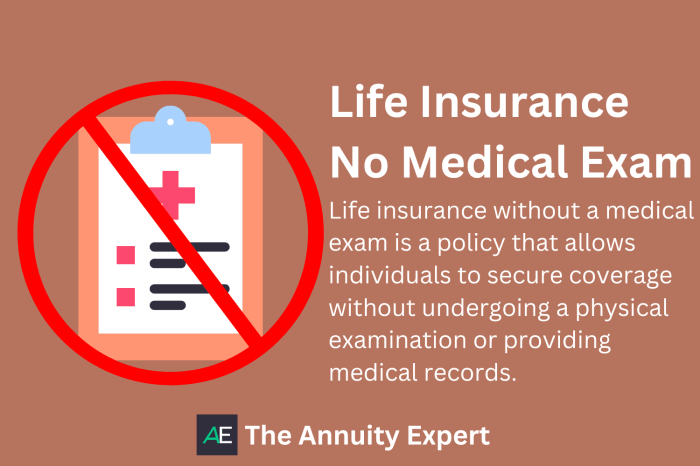
    Cheap term life insurance no medical exam – As cheap term life insurance without medical exams takes center stage, it beckons individuals seeking financial protection with its unparalleled convenience and accessibility. This innovative insurance solution eliminates the traditional medical exam requirement, making it an ideal choice for those who prioritize speed, privacy, or have health concerns.

    The absence of a medical exam streamlines the application process, allowing you to secure coverage quickly and efficiently. It also provides peace of mind for individuals who may be hesitant to undergo medical examinations due to health conditions or personal preferences.

    Benefits of Cheap Term Life Insurance without Medical Exam

    Cheap term life insurance no medical exam

    Term life insurance without a medical exam offers several advantages, making it an attractive option for individuals seeking affordable and convenient coverage.

    Accessibility and Convenience

    No-exam policies eliminate the need for invasive medical examinations, which can be time-consuming and uncomfortable. This makes it a hassle-free process, especially for those with busy schedules or health concerns.

    Eligibility and Coverage

    No-exam term life insurance is particularly beneficial for individuals who may not qualify for traditional policies due to pre-existing conditions or other health factors. It provides coverage for a wide range of causes of death, ensuring peace of mind for policyholders.

    Affordability and Simplicity, Cheap term life insurance no medical exam

    By eliminating the cost of medical exams, no-exam term life insurance policies are generally more affordable than traditional policies. The application process is also simplified, requiring only basic information about your health and lifestyle.

    Factors to Consider When Choosing a Policy

    Selecting a cheap term life insurance policy without a medical exam requires careful consideration of several key factors that can impact your premiums and coverage. Understanding these factors will help you make an informed decision that aligns with your needs and financial situation.

    The primary factors to consider include your age, health, and lifestyle habits. These elements play a significant role in determining your risk profile and, consequently, the cost of your insurance policy.

    Age

    Age is a crucial factor in term life insurance premiums. As you age, your risk of developing health conditions increases, leading to higher premiums. Younger individuals typically pay lower premiums than older individuals because they have a lower risk of experiencing health issues.

    Health

    Your overall health status is another critical factor that insurance companies assess when determining your premiums. Individuals with pre-existing medical conditions or a history of chronic illnesses may face higher premiums. On the other hand, those in good health and with a clean medical history can qualify for lower premiums.

    Lifestyle

    Your lifestyle habits, such as smoking, excessive alcohol consumption, and risky hobbies, can also impact your premiums. Insurance companies view these factors as indicators of potential health risks and may adjust premiums accordingly. Individuals who engage in healthier lifestyles and avoid risky behaviors can secure lower premiums.

    Tips for Comparing Policies

    • Obtain quotes from multiple insurance providers to compare premiums and coverage options.
    • Review the policy details thoroughly, including the coverage amount, term length, and any exclusions or limitations.
    • Consider your budget and financial goals to determine the coverage amount and premium that aligns with your needs.
    • Seek advice from an insurance agent or financial advisor to gain a comprehensive understanding of your options and make an informed decision.

    Understanding Coverage and Exclusions

    Exam

    Understanding the coverage and exclusions of a cheap term life insurance policy without a medical exam is crucial to ensure you have the right protection for your needs. These policies typically provide coverage for death due to natural causes, accidents, and other specified events.

    However, there may be certain exclusions and limitations that apply.

    Types of Coverage

    * Death benefit: The primary coverage provided by term life insurance, which pays out a lump sum to your beneficiaries upon your death.

    Accidental death benefit

    Additional coverage that provides a higher death benefit if your death results from an accident.

    Dismemberment benefit

    Coverage that provides a benefit if you lose a limb or eyesight due to an accident.

    Common Exclusions

    * Pre-existing conditions: Most policies exclude coverage for deaths resulting from pre-existing medical conditions that you had before the policy was issued.

    Suicide

    Many policies exclude coverage for deaths resulting from suicide within the first two years of the policy.

    High-risk activities

    Certain policies may exclude coverage for deaths resulting from high-risk activities, such as skydiving or bungee jumping.

    Criminal activity

    Policies typically exclude coverage for deaths resulting from criminal activity.

    Importance of Understanding Terms and Conditions

    It is essential to thoroughly read and understand the terms and conditions of your policy before purchasing. This will help you avoid any surprises down the road and ensure you are fully aware of the coverage and exclusions that apply.

    Application Process and Approval: Cheap Term Life Insurance No Medical Exam

    Cheap term life insurance no medical exam

    Applying for term life insurance without a medical exam is a straightforward process designed for convenience. The application typically consists of a few simple steps, making it accessible to individuals seeking coverage quickly and easily.

    Underwriting for policies without a medical exam involves assessing the applicant’s health and lifestyle based on information provided in the application. Insurers use sophisticated algorithms and data analysis to evaluate factors such as age, gender, occupation, and medical history disclosed by the applicant.

    Approval Process

    The approval process typically involves reviewing the applicant’s information and making a decision within a short period. In many cases, approval can be granted within a matter of hours or days, providing peace of mind and timely coverage to the applicant.

    Reputable Providers and Policy Options

    Navigating the world of cheap term life insurance without a medical exam can be daunting, but it doesn’t have to be. Numerous reputable providers offer affordable policies tailored to your specific needs. This section will introduce you to some of the leading providers and help you understand their policy options.

    When selecting a provider, it’s crucial to consider their financial stability, customer service, and policy terms. Research different companies, read reviews, and compare their offerings to make an informed decision.

    List of Reputable Providers

    • Banner Life Insurance Company:Known for its competitive rates and customizable policies.
    • Ethos Life Insurance:Offers instant coverage and simplified underwriting.
    • Haven Life Insurance Agency:Provides affordable coverage with no hidden fees.
    • Legal & General America:Established provider with a wide range of policy options.
    • Prudential Financial:Offers comprehensive coverage with various riders and add-ons.

    Policy Options Comparison

    Provider Coverage Amount Premiums Benefits
    Banner Life $100,000

    $10,000,000

    Starting at $15/month Guaranteed coverage, flexible payment options
    Ethos Life $10,000

    $1,000,000

    Starting at $7/month Instant approval, no medical exam required
    Haven Life $25,000

    $1,000,000

    Starting at $12/month Simplified underwriting, no medical exam required
    Legal & General America $50,000

    $10,000,000

    Starting at $18/month Flexible coverage terms, variety of riders
    Prudential Financial $100,000

    $10,000,000

    Starting at $20/month Comprehensive coverage, accidental death benefit

    Choosing the Right Provider and Policy

    Choosing the right provider and policy depends on your individual circumstances and financial goals. Consider the following factors:

    • Coverage amount:Determine the amount of coverage you need to protect your loved ones financially.
    • Premiums:Compare premiums from different providers to find the most affordable option.
    • Benefits:Review the benefits offered by each policy, such as guaranteed coverage, flexible payment options, or additional riders.
    • Customer service:Choose a provider with a reputation for excellent customer support.

    Conclusive Thoughts

    In conclusion, cheap term life insurance without a medical exam offers a valuable alternative for individuals seeking affordable and accessible life insurance coverage. By eliminating the medical exam requirement, this insurance solution empowers individuals to protect their loved ones’ financial well-being with ease and convenience.

    FAQ Guide

    Who can benefit from cheap term life insurance without a medical exam?

    Individuals who prioritize convenience, value privacy, or have health concerns that may impact traditional medical exams can greatly benefit from this insurance option.

    How does the underwriting process work without a medical exam?

    Insurance companies typically assess your health and lifestyle factors through a simplified application process that includes questions about your medical history, occupation, and lifestyle habits.

    Are there any limitations or exclusions in cheap term life insurance without a medical exam?

    While these policies generally offer comprehensive coverage, it’s essential to carefully review the policy terms and conditions to understand any potential exclusions or limitations that may apply.

  • Best Online Term Insurance: A Comprehensive Guide to Affordable Protection

    Best Online Term Insurance: A Comprehensive Guide to Affordable Protection

    In the realm of financial security, best online term insurance stands as a beacon of protection, offering a lifeline of peace of mind in the face of life’s uncertainties. With its unparalleled convenience, tailored coverage, and competitive premiums, online term insurance has revolutionized the way we safeguard our loved ones and ensure their well-being.

    From understanding the intricacies of term insurance to navigating the complexities of choosing the right provider, this comprehensive guide will illuminate the path to finding the best online term insurance that meets your unique needs and budget.

    Overview of Best Online Term Insurance

    Term insurance is a type of life insurance that provides coverage for a specific period, such as 10, 20, or 30 years. If the insured person dies during the term, the beneficiaries will receive a death benefit. Term insurance is typically less expensive than other types of life insurance, such as whole life insurance, because it does not have a cash value component.

    Online term insurance has become increasingly popular in recent years. This is because it is convenient, affordable, and easy to compare quotes from different insurers. However, there are also some disadvantages to purchasing term insurance online, such as the lack of personal interaction with an agent and the potential for fraud.

    Advantages of Purchasing Term Insurance Online

    • Convenience: You can purchase term insurance online from the comfort of your own home.
    • Affordability: Online term insurance is typically less expensive than term insurance purchased through an agent.
    • Easy to compare quotes: You can easily compare quotes from different insurers online.
    • No need for a medical exam: Some online insurers offer term insurance without requiring a medical exam.

    Disadvantages of Purchasing Term Insurance Online

    • Lack of personal interaction: You will not have the opportunity to meet with an agent in person when you purchase term insurance online.
    • Potential for fraud: There is a potential for fraud when you purchase term insurance online, as you are not dealing with an agent face-to-face.
    • Limited coverage options: Online term insurance providers may not offer as many coverage options as traditional insurers.
    • May not be suitable for everyone: Online term insurance may not be suitable for everyone, such as those with complex financial needs or those who are not comfortable purchasing insurance online.

    Factors to Consider When Choosing an Online Term Insurance Provider

    Best online term insurance

    Selecting the right online term insurance provider is crucial for securing financial protection for your loved ones. Several key factors must be considered to ensure you make an informed decision that meets your specific needs.

    Financial Stability

    The financial stability of an insurance provider is paramount. Look for companies with a strong track record of paying claims and a high financial strength rating from reputable agencies like AM Best or Standard & Poor’s. This rating indicates the insurer’s ability to meet its financial obligations, ensuring that your beneficiaries will receive the promised death benefit.

    Customer Service

    Excellent customer service is essential for a smooth and hassle-free experience. Choose providers with a responsive and knowledgeable support team available through multiple channels, such as phone, email, and online chat. Read reviews from other policyholders to gauge the provider’s customer service quality.

    Policy Options

    Consider the range of policy options offered by the provider. This includes coverage amounts, policy terms, and riders. Ensure that the provider offers options that align with your financial goals and risk tolerance. Some providers may offer additional benefits, such as accelerated death benefits or guaranteed insurability options, which can enhance your coverage.

    Underwriting and Medical Exams

    Underwriting is the process by which an insurance company assesses your risk and determines your premium. Some providers use simplified underwriting, which involves answering a few health questions without requiring a medical exam. Others may require a full medical exam to assess your health and lifestyle factors more accurately.

    Understand the underwriting process and medical exam requirements of each provider to choose one that suits your circumstances.

    Top-Rated Online Term Insurance Providers

    When choosing an online term insurance provider, it’s important to consider factors such as coverage options, premiums, customer service, and financial strength. To help you make an informed decision, we’ve compiled a table comparing the top-rated online term insurance providers.

    Coverage Options

    The coverage options offered by online term insurance providers vary widely. Some providers offer basic coverage that includes death benefits only, while others offer more comprehensive coverage that includes additional benefits such as disability income protection and long-term care coverage.

    Premiums

    The premiums you pay for online term insurance will depend on a number of factors, including your age, health, and the amount of coverage you purchase. It’s important to compare quotes from multiple providers to find the best rate.

    Customer Service

    The quality of customer service you receive from an online term insurance provider is important. You want to make sure that you can easily get in touch with a customer service representative if you have any questions or need to file a claim.

    Financial Strength

    The financial strength of an online term insurance provider is important because it indicates the provider’s ability to pay claims. You want to make sure that you choose a provider that has a strong financial track record.

    Table of Top-Rated Online Term Insurance Providers

    Provider Coverage Options Premiums Customer Ratings
    Bestow Death benefits only Low Excellent
    Haven Life Death benefits only Low Excellent
    Ladder Death benefits, disability income protection, long-term care coverage Moderate Good
    Lemonade Death benefits, critical illness coverage, accidental death coverage Low Good
    Policygenius Death benefits, disability income protection, long-term care coverage Moderate Good

    Strengths and Weaknesses of Each Provider

    Bestow:Strengths: Low premiums, excellent customer service. Weaknesses: Limited coverage options.

    Haven Life:Strengths: Low premiums, excellent customer service. Weaknesses: Limited coverage options.

    Ladder:Strengths: Comprehensive coverage options, moderate premiums. Weaknesses: Customer service can be slow at times.

    Lemonade:Strengths: Low premiums, innovative coverage options. Weaknesses: Customer service can be slow at times.

    Policygenius:Strengths: Comprehensive coverage options, moderate premiums. Weaknesses: Customer service can be slow at times.

    Tips for Getting the Best Term Insurance Quotes

    Obtaining the most competitive term insurance quotes online requires careful consideration and a strategic approach. Here are some valuable tips to guide you in securing the best possible coverage at an affordable price:

    Importance of Comparing Quotes:

    • Never settle for the first quote you receive. It’s crucial to compare quotes from multiple providers to ensure you’re getting the best deal. Different insurers may offer varying premiums based on their underwriting criteria and risk assessment models.
    • Use online comparison tools or work with an independent insurance agent who represents multiple carriers. This allows you to quickly and easily compare coverage options and premiums from various providers.

    Factors Influencing Premiums:

    The cost of your term insurance premium is largely determined by three key factors:

    • Age:Generally, younger individuals pay lower premiums due to a lower perceived risk of mortality. As you age, the likelihood of health issues increases, leading to higher premiums.
    • Health:Your overall health and medical history play a significant role in determining your premium. Insurers assess your health through medical exams, blood tests, and questionnaires. A healthy lifestyle, including regular exercise and a balanced diet, can positively impact your insurability and premium rates.

    • Lifestyle:Certain risky behaviors, such as smoking or participating in dangerous hobbies, can increase your premium. Insurers view these activities as potential risk factors that may affect your life expectancy.

    Online Term Insurance Policy Features

    Best online term insurance

    Online term insurance policies offer various features and benefits that enhance their value. Understanding these features is crucial for making informed decisions about your coverage.

    Coverage Amounts

    Coverage amounts refer to the maximum payout your beneficiaries will receive upon your death. Selecting the right coverage amount is essential to ensure your loved ones are financially protected. Consider your income, expenses, debts, and future financial goals when determining the appropriate coverage.

    Policy Terms

    Policy terms specify the duration of your coverage. Common policy terms range from 10 to 30 years. Choose a policy term that aligns with your financial obligations and life stage. Longer policy terms provide more extended coverage but may come with higher premiums.

    Riders

    Riders are optional add-ons that can enhance your policy’s coverage. Common riders include:

    • Accidental Death Benefit: Provides an additional payout if your death results from an accident.
    • Waiver of Premium Rider: Waives your premium payments if you become disabled and unable to work.
    • Guaranteed Insurability Rider: Allows you to purchase additional coverage without undergoing a medical exam at predetermined intervals.

    Accelerated Death Benefits

    Accelerated death benefits allow you to access a portion of your death benefit while you are still living if you are diagnosed with a terminal illness or experience a critical health event. This benefit provides financial assistance for medical expenses or other needs during a difficult time.

    Living Benefits, Best online term insurance

    Living benefits provide access to a portion of your death benefit while you are still alive. These benefits can be used for long-term care expenses, chronic illnesses, or other qualifying events. Living benefits offer flexibility and financial security in the face of unexpected life circumstances.

    Concluding Remarks: Best Online Term Insurance

    Term insurance plan max life plus plans thus protected concept based community family

    As we conclude our exploration of best online term insurance, it is evident that this innovative solution has transformed the landscape of financial planning. By embracing the advantages of online insurance, you empower yourself to make informed decisions, optimize coverage, and secure the future of those who matter most.

    Remember, the best term insurance is the one that aligns seamlessly with your financial goals and provides unwavering protection against life’s unforeseen events.

    Answers to Common Questions

    What is the difference between term insurance and whole life insurance?

    Term insurance provides coverage for a specific period, while whole life insurance offers lifelong coverage and has a cash value component.

    How do I choose the right term insurance amount?

    Consider your income, expenses, debts, and family situation to determine the appropriate coverage amount.

    What factors affect term insurance premiums?

    Age, health, lifestyle, and coverage amount are key factors that influence premiums.

  • Best No Medical Exam Life Insurance Policies: A Comprehensive Guide

    Dive into the realm of life insurance policies that offer peace of mind without the hassle of medical exams. Best no medical exam life insurance policies are gaining traction, and this comprehensive guide will illuminate the benefits, drawbacks, and nuances of these policies, empowering you to make informed decisions about protecting your loved ones.

    Uncover the secrets of no medical exam life insurance, tailored to meet the unique needs of seniors, young adults, individuals with pre-existing conditions, those in high-risk occupations, and those seeking term life insurance. Explore the underwriting processes, compare coverage amounts, premiums, and riders, and gain insights into the factors that influence policy approvals.

    Best No Medical Exam Life Insurance Policies for Seniors

    Best no medical exam life insurance policies

    No medical exam life insurance policies can be a good option for seniors who are in good health but don’t want to go through the hassle of a medical exam. These policies are typically easier to qualify for than traditional life insurance policies, and they can provide valuable financial protection for your loved ones in the event of your death.

    However, there are some drawbacks to no medical exam life insurance policies. One is that they typically have lower coverage limits than traditional policies. Another is that they may be more expensive than traditional policies, especially for seniors.

    Benefits of No Medical Exam Life Insurance Policies for Seniors

    • No medical exam required
    • Easier to qualify for than traditional life insurance policies
    • Can provide valuable financial protection for your loved ones

    Drawbacks of No Medical Exam Life Insurance Policies for Seniors, Best no medical exam life insurance policies

    • Lower coverage limits than traditional policies
    • May be more expensive than traditional policies

    Table Comparing Different No Medical Exam Life Insurance Policies for Seniors

    Company Coverage Amount Premium Riders
    Mutual of Omaha Up to $250,000 $20 per month Accidental death benefit, waiver of premium
    Prudential Up to $100,000 $30 per month Accidental death benefit, waiver of premium, long-term care rider
    Transamerica Up to $50,000 $40 per month Accidental death benefit, waiver of premium, child rider

    Underwriting Process for No Medical Exam Life Insurance Policies for Seniors

    The underwriting process for no medical exam life insurance policies for seniors is typically less stringent than the underwriting process for traditional life insurance policies. This is because insurers are taking on more risk when they issue a policy without a medical exam.

    As a result, seniors may be asked to provide additional information, such as their medical history and lifestyle habits.

    Best No Medical Exam Life Insurance Policies for Young Adults

    Exam

    No medical exam life insurance policies are an increasingly popular option for young adults. These policies offer a number of benefits, including:

    • No medical exam required
    • Quick and easy to apply for
    • Affordable premiums
    • Coverage amounts up to $1 million

    However, there are also some drawbacks to no medical exam life insurance policies. These include:

    • Coverage amounts may be lower than with a traditional life insurance policy
    • Premiums may be higher than with a traditional life insurance policy
    • There may be more restrictions on coverage

    Overall, no medical exam life insurance policies can be a good option for young adults who are looking for an affordable and easy way to get life insurance coverage. However, it is important to weigh the benefits and drawbacks of these policies before making a decision.

    Underwriting Process for No Medical Exam Life Insurance Policies for Young Adults

    The underwriting process for no medical exam life insurance policies for young adults is typically less stringent than the underwriting process for traditional life insurance policies. This is because no medical exam is required, so the insurance company cannot use your medical history to assess your risk.

    Instead, the insurance company will use other factors to assess your risk, such as your age, occupation, and lifestyle.

    If you are a young adult who is in good health and has a low-risk lifestyle, you may be able to qualify for a no medical exam life insurance policy with a low premium. However, if you have any health conditions or engage in high-risk activities, you may be required to pay a higher premium or you may not be able to qualify for coverage.

    Best No Medical Exam Life Insurance Policies for People with Pre-Existing Conditions

    No medical exam life insurance policies can be a good option for people with pre-existing conditions who need life insurance coverage but cannot qualify for a traditional policy. These policies do not require a medical exam, so you can get coverage without having to worry about your health history.

    However, there are some important things to keep in mind before you purchase a no medical exam life insurance policy.

    Benefits of No Medical Exam Life Insurance Policies for People with Pre-Existing Conditions

    There are several benefits to purchasing a no medical exam life insurance policy if you have a pre-existing condition. First, these policies can provide you with peace of mind knowing that your loved ones will be financially protected if you pass away.

    Second, no medical exam life insurance policies can be more affordable than traditional policies, as they do not require the insurer to pay for a medical exam.

    Drawbacks of No Medical Exam Life Insurance Policies for People with Pre-Existing Conditions

    There are also some drawbacks to purchasing a no medical exam life insurance policy if you have a pre-existing condition. First, these policies typically have lower coverage amounts than traditional policies. Second, the premiums for no medical exam life insurance policies can be higher than the premiums for traditional policies.

    Third, no medical exam life insurance policies may not cover all pre-existing conditions. It is important to read the policy carefully before you purchase it to make sure that your condition is covered.

    Underwriting Process for No Medical Exam Life Insurance Policies for People with Pre-Existing Conditions

    The underwriting process for no medical exam life insurance policies for people with pre-existing conditions is different from the underwriting process for traditional policies. When you apply for a no medical exam life insurance policy, the insurer will ask you a series of questions about your health history.

    The insurer will use this information to determine your risk of dying and set your premium. If you have a pre-existing condition, the insurer may require you to provide additional information, such as a doctor’s note or medical records. The insurer may also order a medical exam to confirm your health status.

    Best No Medical Exam Life Insurance Policies for High-Risk Occupations

    Best no medical exam life insurance policies

    Individuals working in high-risk occupations face unique challenges when it comes to obtaining life insurance. Traditional policies require extensive medical examinations, which can be invasive and time-consuming. No medical exam life insurance policies offer a convenient alternative for high-risk workers, providing coverage without the need for intrusive medical tests.

    Benefits and Drawbacks of No Medical Exam Life Insurance for High-Risk Occupations

    Benefits:*

    -*Convenience

    No medical exams required, making the application process quick and hassle-free.

    • -*Speed

      Policies can be approved within days, providing peace of mind and financial protection.

    • -*Accessibility

      Available to individuals with pre-existing conditions or risky occupations.

    Drawbacks:*

    -*Limited Coverage

    Coverage amounts may be lower than traditional policies due to the lack of medical underwriting.

    • -*Higher Premiums

      Premiums can be higher than traditional policies to compensate for the increased risk.

    • -*Riders

      Some riders, such as accidental death or dismemberment, may not be available with no medical exam policies.

    Comparison of No Medical Exam Life Insurance Policies for High-Risk Occupations

    The following table compares different no medical exam life insurance policies for high-risk occupations:| Company | Coverage Amount | Premiums | Riders ||—|—|—|—||

    *Haven Life | Up to $1 million | Starting at $15/month | Accidental death and dismemberment |

    |

    *Ladder | Up to $3 million | Starting at $20/month | Critical illness, child riders |

    |

    *Fabric | Up to $5 million | Starting at $25/month | Disability, hospital indemnity |

    Underwriting Process for No Medical Exam Life Insurance for High-Risk Occupations

    The underwriting process for no medical exam life insurance for high-risk occupations involves:*

    -*Occupation Review

    Insurers will assess the applicant’s occupation and determine the associated risk level.

    • -*Financial History

      Applicants will need to provide financial information to demonstrate their ability to pay premiums.

    • -*Lifestyle Factors

      Insurers may consider factors such as smoking, alcohol consumption, and overall health habits.

    Based on these factors, insurers will determine the coverage amount and premium for the policy. It’s important to disclose all relevant information accurately to ensure a fair underwriting decision.

    Best No Medical Exam Life Insurance Policies for Term Life Insurance

    Term life insurance policies provide coverage for a specific period of time, such as 10, 20, or 30 years. No medical exam life insurance policies for term life insurance offer the convenience of obtaining coverage without undergoing a medical examination.

    Benefits of No Medical Exam Life Insurance Policies for Term Life Insurance

    • Convenience: No medical exam required, making the application process faster and easier.
    • Speed: Policies can be issued quickly, often within a few days.
    • Accessibility: Available to individuals who may not qualify for traditional life insurance due to health conditions or high-risk occupations.

    Drawbacks of No Medical Exam Life Insurance Policies for Term Life Insurance

    • Limited Coverage Amounts: Coverage amounts may be lower than traditional life insurance policies.
    • Higher Premiums: Premiums may be higher to offset the risk associated with not having a medical exam.
    • Limited Rider Options: Riders, such as disability or accidental death benefits, may not be available.

    Comparison of No Medical Exam Life Insurance Policies for Term Life Insurance

    Provider Coverage Amount Premiums Riders
    Haven Life Up to $1 million Starting at $15 per month Accidental death benefit
    Ladder Life Up to $3 million Starting at $20 per month None
    Fidelity Life Up to $2 million Starting at $25 per month Disability waiver of premium

    Underwriting Process for No Medical Exam Life Insurance Policies for Term Life Insurance

    The underwriting process for no medical exam life insurance policies for term life insurance typically involves the following steps:

    • Application:Complete an online or paper application, providing basic information about your health and lifestyle.
    • Phone Interview:A representative from the insurance company may contact you to ask additional questions about your health and medical history.
    • Motor Vehicle Report:The insurance company may obtain a motor vehicle report to assess your driving history and risk factors.
    • Prescription Check:The insurance company may check prescription databases to review your medication history.
    • Social Media Review:Some insurance companies may review your social media accounts to assess your lifestyle and health-related information.

    Conclusion

    In the tapestry of life, securing the future well-being of your loved ones is paramount. Best no medical exam life insurance policies offer a path to safeguard their financial stability in the face of life’s uncertainties. By navigating the complexities of these policies with the guidance provided in this comprehensive guide, you can make informed choices that will provide peace of mind and lasting protection.

    Essential Questionnaire

    Can I get a no medical exam life insurance policy if I have a pre-existing condition?

    Yes, there are no medical exam life insurance policies available for individuals with pre-existing conditions. However, the underwriting process may be more stringent, and coverage amounts and premiums may be affected.

    Are no medical exam life insurance policies more expensive than traditional policies?

    In general, no medical exam life insurance policies tend to have higher premiums compared to traditional policies that require medical exams. This is because the insurer assumes a higher risk by not conducting a medical examination.

    What is the maximum coverage amount I can get with a no medical exam life insurance policy?

    Coverage amounts for no medical exam life insurance policies vary depending on the insurer and the applicant’s age, health, and other factors. Typically, coverage amounts range from $10,000 to $500,000.

  • M&A Lawyers: Guiding Complex Transactions with Expertise and Strategy

    M&A Lawyers: Guiding Complex Transactions with Expertise and Strategy

    M&A lawyers stand at the forefront of complex business transactions, navigating legal intricacies with expertise and strategic guidance. They play a pivotal role in shaping the corporate landscape, ensuring smooth mergers, acquisitions, and other transformative deals.

    With a deep understanding of the legal complexities involved in M&A transactions, these lawyers provide invaluable support to clients, guiding them through the complexities of due diligence, negotiation, and regulatory compliance.

    Legal Expertise and Experience

    M&A lawyer

    M&A lawyers require a comprehensive understanding of the legal complexities involved in mergers and acquisitions. They must be well-versed in corporate law, securities law, antitrust law, and tax law. Additionally, they should have experience in negotiating and drafting complex legal agreements, conducting due diligence investigations, and managing regulatory approvals.

    Types of M&A Transactions, M&A lawyer

    M&A transactions can take various forms, including mergers, acquisitions, divestitures, and joint ventures. Each type of transaction presents unique legal challenges, and M&A lawyers must be familiar with the specific legal requirements and regulations that apply to each type.

    Legal Due Diligence

    Legal due diligence is a critical step in any M&A transaction. It involves a thorough investigation of the target company’s legal, financial, and operational condition. The purpose of due diligence is to identify potential risks and liabilities that could impact the transaction.

    M&A lawyers play a key role in conducting due diligence, ensuring that all relevant legal issues are addressed and that the client is fully informed of the risks involved.

    Industry Knowledge and Market Trends

    M&A lawyer

    Industry knowledge is paramount for M&A lawyers as it enables them to understand the nuances of the industries they operate in. This understanding helps them provide tailored advice to their clients, anticipate potential issues, and navigate the complex regulatory landscape.

    Current market trends, such as the rise of digitalization and globalization, have a significant impact on M&A transactions. Lawyers must stay abreast of these trends to effectively advise their clients on the potential risks and opportunities they present.

    Regulatory Landscape

    The regulatory landscape plays a crucial role in shaping M&A activity. Lawyers must be well-versed in the relevant laws and regulations to ensure compliance and mitigate potential legal risks. They must also monitor changes in the regulatory environment to anticipate their impact on future transactions.

    Communication and Negotiation Skills

    Effective communication and negotiation skills are essential for M&A lawyers. They must be able to clearly and concisely communicate complex legal concepts to clients, other lawyers, and business professionals. They must also be able to negotiate effectively on behalf of their clients, ensuring that their interests are protected.

    There are a number of different negotiation strategies that can be used in M&A transactions. Some of the most common strategies include:

    • Positional bargaining:This is a traditional negotiation strategy in which each party starts by stating their desired outcome and then gradually moves towards a compromise.
    • Interest-based bargaining:This is a more collaborative negotiation strategy in which the parties focus on identifying their underlying interests and then working together to find a solution that meets the needs of both parties.
    • Principled negotiation:This is a negotiation strategy that is based on the principles of fairness, objectivity, and mutual respect. The goal of principled negotiation is to reach an agreement that is fair to both parties and that is based on objective criteria.

    In addition to strong communication and negotiation skills, M&A lawyers must also be able to build strong relationships with clients and other parties involved in the transaction. This includes developing a deep understanding of the client’s business and objectives, as well as being able to work effectively with other professionals, such as accountants, investment bankers, and financial advisors.

    Ethical Considerations and Professional Responsibilities: M&A Lawyer

    M&A lawyers are bound by strict ethical considerations and professional responsibilities. These include adhering to the highest standards of integrity, maintaining confidentiality, and avoiding conflicts of interest.

    One of the most important ethical considerations for M&A lawyers is maintaining confidentiality. M&A transactions often involve sensitive information, such as financial data, business plans, and trade secrets. Lawyers must take all necessary steps to protect this information from unauthorized disclosure.

    Conflicts of Interest

    Another important ethical consideration for M&A lawyers is avoiding conflicts of interest. A conflict of interest arises when a lawyer has a personal or financial interest that could impair their ability to represent their client objectively. For example, a lawyer cannot represent both the buyer and seller in an M&A transaction.

    Professional Responsibilities

    M&A lawyers have a professional responsibility to provide their clients with the highest quality legal advice. They must also act in the best interests of their clients and the public. This means that M&A lawyers must be honest, diligent, and competent.

    Career Path and Advancement Opportunities

    The career path of an M&A lawyer offers a dynamic and rewarding journey, with opportunities for advancement and specialization. As you progress through your career, you will assume increasingly complex roles and responsibilities, broadening your legal expertise and strategic advisory skills.

    In the early stages of your career, you may work as an associate attorney, assisting senior lawyers with due diligence, drafting transaction documents, and negotiating agreements. With experience and proven performance, you can progress to a senior associate or counsel position, taking on more responsibility for managing transactions and advising clients.

    Partnership and Leadership

    At the partnership level, you will have a significant role in developing and executing the firm’s M&A strategy, mentoring junior lawyers, and building client relationships. As you advance in your career, you may assume leadership positions within the firm, such as practice group leader or managing partner, overseeing the overall direction and growth of the M&A practice.

    Tips for Advancement

    To achieve professional success in M&A law, consider the following tips:

    • Develop a strong foundation in corporate law and finance.
    • Gain practical experience through internships or secondments.
    • Build a network of industry professionals and potential clients.
    • Stay updated on legal and regulatory developments.
    • li>Seek mentorship from experienced lawyers.

    • Develop excellent communication, negotiation, and analytical skills.

    Ultimate Conclusion

    M&A lawyer

    In conclusion, M&A lawyers are indispensable partners in the world of business transactions. Their expertise, communication skills, and ethical considerations empower them to facilitate successful deals that shape the future of companies and industries.

    Query Resolution

    What is the primary role of an M&A lawyer?

    M&A lawyers advise clients on legal aspects of mergers, acquisitions, and other complex business transactions, ensuring compliance and protecting their interests.

    What skills are essential for an M&A lawyer?

    M&A lawyers require a strong foundation in corporate law, negotiation skills, and an understanding of industry trends and regulations.

    What are the ethical considerations for M&A lawyers?

    M&A lawyers must maintain confidentiality, avoid conflicts of interest, and act in the best interests of their clients while adhering to professional standards.

  • Navigating the Labyrinth of AI Regulation: A Comprehensive Guide

    Navigating the Labyrinth of AI Regulation: A Comprehensive Guide

    AI regulation, a topic of paramount importance in the digital age, presents a fascinating tapestry of ethical, economic, and legal considerations. As we delve into the intricacies of AI regulation, we will explore the potential ethical implications, analyze its economic impact, and delve into industry-specific regulations.

    Our journey will also encompass the significance of international cooperation and the challenges of enforcement and compliance.

    Ethical Considerations

    AI regulation raises significant ethical concerns that require careful consideration. These concerns include:

    Privacy:AI systems collect and process vast amounts of data, raising concerns about the potential misuse or abuse of personal information.

    Bias:AI systems can inherit and amplify biases from the data they are trained on, leading to unfair or discriminatory outcomes.

    Accountability:As AI systems become more complex, it becomes challenging to determine who is responsible for their actions and decisions.

    Key Principles for Ethical AI Regulation

    To address these ethical concerns, AI regulation should be guided by key principles, such as:

    • Transparency:AI systems should be transparent and accountable, allowing users to understand how they work and make decisions.
    • Fairness:AI systems should be designed to be fair and unbiased, ensuring that they do not discriminate against individuals or groups.
    • Privacy:AI systems should respect user privacy and protect personal data from unauthorized access or misuse.
    • Accountability:There should be clear mechanisms for identifying and holding accountable those responsible for the development and use of AI systems.
    • Human oversight:AI systems should be subject to human oversight to ensure that they are used responsibly and ethically.

    Economic Impact

    AI regulation

    AI regulation has the potential to bring both positive and negative economic effects. On the one hand, it can promote innovation and competition, while on the other hand, it can also lead to increased costs and reduced efficiency.

    One of the potential benefits of AI regulation is that it can encourage innovation. By setting clear rules and standards for the development and use of AI, governments can create a more level playing field for businesses and encourage them to invest in research and development.

    Impact on Innovation

    • Promote innovation by establishing clear rules and standards.
    • Encourage investment in research and development by providing a more stable regulatory environment.
    • Create a level playing field for businesses, allowing smaller companies to compete with larger ones.

    Impact on Competition

    • Foster competition by preventing large companies from dominating the market.
    • Encourage new entrants by reducing barriers to entry.
    • Promote consumer choice by providing a wider range of AI products and services.

    Impact on Job Markets, AI regulation

    • Create new jobs in the AI sector.
    • Displace workers in some industries, such as manufacturing and transportation.
    • Require workers to acquire new skills to adapt to the changing job market.

    Industry-Specific Regulations

    As AI becomes more pervasive, specific industries and sectors are likely to face unique regulatory challenges. These regulations aim to address the potential risks and ethical concerns associated with AI in particular domains.

    Industries that heavily rely on data collection and processing, such as healthcare, finance, and transportation, are likely to be subject to more stringent AI regulations. These regulations will focus on ensuring data privacy, preventing algorithmic bias, and promoting fairness and transparency in decision-making.

    Healthcare

    In healthcare, AI is used for tasks such as medical diagnosis, treatment planning, and drug discovery. The use of AI in healthcare raises concerns about data privacy, as patient data is highly sensitive. Additionally, algorithmic bias in AI systems could lead to unfair or inaccurate medical decisions.

    Existing regulations in healthcare, such as the Health Insurance Portability and Accountability Act (HIPAA) in the United States, aim to protect patient privacy and data security. Proposed regulations, such as the EU’s Artificial Intelligence Act, include specific provisions for AI in healthcare, focusing on transparency, accountability, and fairness.

    Finance

    In finance, AI is used for tasks such as fraud detection, risk assessment, and algorithmic trading. The use of AI in finance raises concerns about market manipulation and systemic risk. Additionally, algorithmic bias in AI systems could lead to unfair or discriminatory lending practices.

    Existing regulations in finance, such as the Dodd-Frank Wall Street Reform and Consumer Protection Act in the United States, aim to prevent financial fraud and systemic risk. Proposed regulations, such as the EU’s Digital Finance Strategy, include specific provisions for AI in finance, focusing on transparency, accountability, and fairness.

    Transportation

    In transportation, AI is used for tasks such as autonomous driving, traffic management, and logistics optimization. The use of AI in transportation raises concerns about safety, liability, and data privacy. Additionally, algorithmic bias in AI systems could lead to unfair or discriminatory pricing practices.

    Existing regulations in transportation, such as the National Highway Traffic Safety Administration (NHTSA) in the United States, aim to ensure the safety of vehicles and drivers. Proposed regulations, such as the EU’s White Paper on Artificial Intelligence, include specific provisions for AI in transportation, focusing on safety, liability, and data privacy.

    International Cooperation

    International cooperation is essential for effective AI regulation. AI systems often transcend national borders, making it necessary for countries to work together to ensure responsible development and deployment.Harmonizing regulations across different jurisdictions presents challenges due to varying legal frameworks, cultural norms, and economic interests.

    However, it also offers opportunities for shared learning, best practice exchange, and coordinated enforcement actions.

    Successful International Efforts

    The Organisation for Economic Co-operation and Development (OECD) has developed AI Principles that provide guidance for responsible AI development. The Global Partnership on Artificial Intelligence (GPAI) is a multi-stakeholder initiative that promotes international cooperation on AI policy.

    Unsuccessful International Efforts

    The United States and the European Union have struggled to find common ground on AI regulation, leading to potential fragmentation in the global AI landscape.

    Enforcement and Compliance

    Ensuring compliance with AI regulations presents several challenges. These include the complexity and rapid evolution of AI technologies, the difficulty in detecting and proving violations, and the lack of harmonized global standards.

    Effective enforcement mechanisms are crucial to ensure that AI is developed and used responsibly. These mechanisms should involve a combination of government agencies, industry self-regulation, and consumer advocacy.

    Role of Government Agencies

    • Establish clear and enforceable regulations.
    • Conduct regular inspections and audits to ensure compliance.
    • Impose penalties for violations, including fines, sanctions, and criminal charges.
    • Provide guidance and support to businesses and consumers on AI regulation compliance.

    Role of Industry Self-Regulation

    • Develop industry codes of conduct and best practices for AI development and use.
    • Establish self-monitoring and reporting mechanisms to ensure compliance.
    • Collaborate with government agencies to provide input on regulation development and enforcement.

    Role of Consumer Advocacy

    • Educate consumers about their rights and responsibilities related to AI.
    • Monitor the market for AI products and services and report any potential violations.
    • Advocate for strong AI regulations and enforcement mechanisms.

    Conclusion: AI Regulation

    AI regulation

    In conclusion, AI regulation is a multifaceted endeavor that requires careful consideration and collaboration among stakeholders. By navigating the complexities of ethical, economic, and legal aspects, we can harness the transformative power of AI while safeguarding our values and ensuring responsible innovation.

    Essential Questionnaire

    What are the key ethical concerns surrounding AI regulation?

    AI regulation raises concerns about privacy, bias, and accountability. It is crucial to establish ethical principles to guide the development and use of AI systems.

    How does AI regulation impact the economy?

    AI regulation can have both positive and negative economic effects. It may foster innovation and competition but also impact job markets. Careful analysis is needed to balance these effects.

    Why is international cooperation important in AI regulation?

    International cooperation is vital to ensure harmonization of AI regulations across jurisdictions. It facilitates the sharing of best practices and prevents regulatory fragmentation.

  • HIPAA Compliance: A Comprehensive Guide to Protecting Patient Privacy

    HIPAA Compliance: A Comprehensive Guide to Protecting Patient Privacy

    In the realm of healthcare, HIPAA compliance stands as a cornerstone of patient privacy protection. This comprehensive guide delves into the intricacies of HIPAA regulations, empowering you with the knowledge to navigate its complexities and ensure the secure handling of sensitive patient data.

    Delving into the core principles, legal implications, and practical implementation strategies, this guide equips you with the tools to conduct HIPAA risk assessments, implement robust data protection measures, and foster a culture of compliance within your organization.

    Understanding HIPAA Compliance

    HIPAA compliance refers to adhering to the Health Insurance Portability and Accountability Act of 1996, a comprehensive US federal law that protects the privacy and security of protected health information (PHI) handled by covered entities.

    HIPAA establishes core principles for handling PHI, including:

    • Privacy:Covered entities must implement safeguards to protect PHI from unauthorized access, use, or disclosure.
    • Security:Covered entities must adopt reasonable and appropriate measures to protect PHI from unauthorized access, use, or disclosure.
    • Breach Notification:Covered entities must notify affected individuals and relevant authorities in the event of a breach involving PHI.
    • Patient Rights:Individuals have the right to access, amend, and request restrictions on the use and disclosure of their PHI.

    Legal Implications of Non-Compliance, HIPAA compliance

    Failure to comply with HIPAA regulations can result in significant legal consequences, including:

    • Civil penalties of up to $50,000 per violation
    • Criminal penalties of up to $250,000 per violation and imprisonment for up to 10 years
    • Reputational damage and loss of patient trust

    HIPAA-Covered Entities

    HIPAA applies to “covered entities,” which include:

    • Healthcare providers who electronically transmit health information in connection with certain transactions, such as claims, benefits, or referrals
    • Health plans, including employer-sponsored group health plans, insurers, and HMOs
    • Healthcare clearinghouses, which process nonstandard health information they receive from another entity into a certain standard format or data
    • Business associates, such as third-party vendors who handle PHI on behalf of covered entities

    Risk Assessment and Mitigation

    HIPAA compliance requires healthcare organizations to conduct regular risk assessments to identify potential security vulnerabilities and develop strategies to mitigate compliance risks. This comprehensive process involves evaluating the organization’s systems, processes, and procedures to determine their susceptibility to security breaches and other threats.

    Conducting a HIPAA Risk Assessment

    To conduct a HIPAA risk assessment, organizations should follow these steps:

    1. Identify the scope of the assessment:Determine which systems, processes, and procedures will be included in the assessment.
    2. Gather information:Collect data about the organization’s security measures, including policies, procedures, and technologies.
    3. Identify potential risks:Analyze the gathered information to identify potential security vulnerabilities and threats.
    4. Assess the likelihood and impact of risks:Determine the probability of each risk occurring and the potential impact it could have on the organization.
    5. Develop mitigation strategies:Create plans to address each risk, including preventive measures, detective controls, and corrective actions.

    Data Protection Measures

    HIPAA compliance requires the implementation of robust data protection measures to safeguard protected health information (PHI). These measures include technical safeguards, encryption, access controls, and data backup and disaster recovery plans.

    Technical safeguards refer to the physical and electronic measures used to protect PHI from unauthorized access, use, or disclosure. These safeguards include firewalls, intrusion detection systems, and encryption.

    Encryption

    Encryption is the process of converting PHI into a form that cannot be easily read or understood by unauthorized individuals. HIPAA requires the use of encryption for all PHI that is stored electronically, transmitted over an open network, or shared with third parties.

    Access Controls

    Access controls are used to limit who can access PHI. These controls can be implemented through the use of passwords, biometrics, or other authentication methods. HIPAA requires covered entities to implement access controls that are appropriate to the size and complexity of their organization.

    Data Backup and Disaster Recovery Plans

    Data backup and disaster recovery plans are essential for protecting PHI in the event of a natural disaster or other emergency. These plans should include procedures for backing up PHI regularly and for restoring PHI in the event of a disaster.

    Employee Training and Awareness: HIPAA Compliance

    HIPAA compliance

    Establishing a comprehensive HIPAA training program for employees is essential for ensuring compliance. This program should educate employees on their roles and responsibilities in protecting PHI, as well as the consequences of non-compliance.

    Key Compliance Responsibilities

    The training program should clearly Artikel the key compliance responsibilities for different roles within the organization. This includes:

    • Identifying and protecting PHI
    • Understanding and following HIPAA privacy and security regulations
    • Reporting any potential HIPAA violations
    • Maintaining the confidentiality of PHI
    • Using PHI only for authorized purposes

    Monitoring Employee Compliance

    It is crucial to monitor employee compliance with HIPAA regulations to identify any gaps or areas for improvement. This can be done through regular audits, reviews of employee activity logs, and feedback from patients or other stakeholders.

    By addressing any identified gaps in employee compliance, organizations can minimize the risk of HIPAA violations and ensure the ongoing protection of PHI.

    Compliance Audits and Monitoring

    HIPAA compliance

    Regular HIPAA compliance audits are crucial for ensuring ongoing adherence to regulations. They identify areas for improvement and demonstrate due diligence in protecting patient data.

    Selecting and Conducting Audits

    • Establish a regular audit schedule (e.g., annually or bi-annually).
    • Engage an independent auditor with expertise in HIPAA compliance.
    • Define the scope and objectives of the audit, including specific areas to be reviewed.
    • Collect and review relevant documentation, such as policies, procedures, and risk assessments.
    • Conduct interviews with key personnel involved in HIPAA compliance.
    • Analyze findings and identify any gaps or areas for improvement.

    Monitoring Ongoing Compliance

    Continuous monitoring is essential to ensure ongoing compliance and prevent lapses. This can include:

    • Regular review of policies and procedures for updates and changes.
    • Tracking and responding to employee training and awareness initiatives.
    • Monitoring security measures, such as firewalls and intrusion detection systems.
    • Reviewing logs and reports for suspicious activity or data breaches.
    • Implementing corrective actions promptly in response to any identified non-compliance.

    Ultimate Conclusion

    Embracing HIPAA compliance is not merely an obligation but an investment in safeguarding patient trust and maintaining the integrity of the healthcare system. By adhering to these guidelines, you empower patients with confidence in the secure handling of their personal information, fostering a positive and ethical healthcare environment.

    FAQ Summary

    What are the key principles of HIPAA compliance?

    HIPAA compliance revolves around three core principles: protecting the privacy of patient health information, ensuring its security, and allowing for appropriate use and disclosure.

    Who is required to comply with HIPAA regulations?

    HIPAA regulations apply to all healthcare providers, health plans, healthcare clearinghouses, and their business associates.

    What are the consequences of HIPAA non-compliance?

    Non-compliance with HIPAA regulations can result in significant fines, imprisonment, and damage to an organization’s reputation.

  • Product Liability Claims: A Comprehensive Overview

    Product Liability Claims: A Comprehensive Overview

    In the realm of legal intricacies, product liability claims stand as a testament to the importance of consumer protection. These claims arise when a product fails to meet expectations, resulting in harm or injury to the user. Understanding the complexities of product liability claims is crucial for both businesses and consumers alike.

    This comprehensive guide delves into the various aspects of product liability claims, from evaluating cases to negotiating settlements and preparing for trial. It provides a clear understanding of the legal framework surrounding these claims, empowering individuals to make informed decisions and safeguard their rights.

    Case Evaluation

    Product liability claims involve assessing whether a product caused harm to a person or property and determining the responsible party. Understanding the elements, types of defects, and potential defenses is crucial in evaluating such claims.

    Elements of a Product Liability Claim

    Establishing a product liability claim requires proving the following elements:

    • Defect: The product must have a defect that made it unreasonably dangerous.
    • Causation: The defect must have caused the plaintiff’s injuries or damages.
    • Damages: The plaintiff must have suffered compensable damages as a result of the product’s defect.

    Types of Product Defects

    Product defects can be classified into three main categories:

    • Manufacturing Defects: Result from errors or mistakes during the manufacturing process.
    • Design Defects: Exist in the product’s design itself, making it inherently dangerous.
    • Marketing Defects: Occur when the product’s labeling or instructions fail to adequately warn consumers about potential hazards.

    Potential Defenses to a Product Liability Claim

    Defendants in product liability claims may raise various defenses, including:

    • Assumption of Risk: The plaintiff voluntarily used the product despite knowing its risks.
    • Contributory Negligence: The plaintiff’s own negligence contributed to their injuries.
    • Statute of Limitations: The claim was filed after the legal deadline.
    • Lack of Causation: The product defect did not actually cause the plaintiff’s injuries.

    Investigation and Discovery

    The investigation and discovery phase of a product liability claim involves gathering information and evidence to support or defend the claim. This process is crucial for both the plaintiff and the defendant to build their case and determine the liability for the alleged product defect.

    A thorough investigation typically begins with examining the product itself, reviewing relevant documents, and interviewing witnesses. Experts may be consulted to provide specialized knowledge and analysis.

    Role of Experts

    Experts play a significant role in product liability cases by providing technical knowledge and opinions on various aspects of the product, its design, manufacturing, and potential defects. They can analyze the product, conduct tests, and review relevant documentation to assess whether the product met safety standards and if any defects existed.

    Methods of Obtaining and Preserving Evidence

    Obtaining and preserving evidence is essential to support the claims and defenses in a product liability case. This may involve:

    • Documenting the product’s condition, including photographs, videos, and written descriptions.
    • Preserving the product itself or its components for further examination and testing.
    • Collecting witness statements, medical records, and other relevant documentation.
    • Obtaining expert reports and analyses.

    Proper preservation of evidence ensures its integrity and prevents spoliation, which can result in adverse consequences for the party responsible for preserving the evidence.

    Negotiation and Settlement

    Liability profiletree disalvo

    Negotiating a product liability settlement involves careful consideration of various factors to ensure a fair and satisfactory outcome. The process requires an understanding of the legal framework, the strength of the claim, and the potential risks and benefits associated with different settlement options.

    Once liability has been established and damages have been assessed, the parties involved can engage in negotiations to reach a settlement agreement. These negotiations are typically conducted between the plaintiff’s attorney and the defendant’s insurance company or legal counsel.

    Factors to Consider When Negotiating a Settlement

    • Liability:The extent to which the defendant is legally responsible for the plaintiff’s injuries.
    • Damages:The economic and non-economic losses suffered by the plaintiff, including medical expenses, lost wages, pain and suffering, and emotional distress.
    • Insurance Coverage:The availability and limits of the defendant’s insurance policy.
    • Legal Fees:The costs associated with pursuing the lawsuit, including attorney’s fees, expert witness fees, and court costs.
    • Tax Implications:The potential tax consequences of receiving a settlement.

    Types of Settlement Agreements, Product liability claims

    There are various types of settlement agreements that can be reached in product liability cases:

    • Lump-Sum Settlement:A single payment made by the defendant to the plaintiff in exchange for a full release of liability.
    • Structured Settlement:A series of periodic payments made by the defendant over a specified period, often designed to provide the plaintiff with a stream of income.
    • Med-Pay Settlement:An agreement that covers only the plaintiff’s medical expenses, with no admission of liability on the part of the defendant.

    Advantages and Disadvantages of Settling a Product Liability Claim

    Advantages of Settling:

    • Certainty:A settlement provides a guaranteed outcome, eliminating the uncertainty of a trial.
    • Timeliness:Settlements can often be reached more quickly than going through a trial, which can take months or even years.
    • Cost Savings:Settling can avoid the substantial costs associated with a trial, such as attorney’s fees and expert witness fees.

    Disadvantages of Settling:

    • Lower Recovery:Settlements often result in a lower recovery than a plaintiff might receive if they were to win at trial.
    • No Admission of Liability:In some settlements, the defendant may not admit liability, which can affect the plaintiff’s ability to pursue other claims.
    • Future Damages:Settlements may not adequately compensate for future damages, such as ongoing medical expenses or lost earning capacity.

    Trial Preparation

    Product liability claims

    Trial preparation in a product liability case involves a comprehensive strategy to ensure a successful outcome. It entails organizing evidence, preparing witnesses, and developing effective trial presentation strategies.

    Creating an Artikel for a Product Liability Trial

    An effective trial Artikel provides a roadmap for the trial and ensures a logical and persuasive presentation of the case. It includes:

    • Opening Statement:A concise overview of the case, including the key facts and legal theories.
    • Direct Examination of Witnesses:A plan for questioning witnesses to elicit favorable testimony.
    • Cross-Examination of Opposing Witnesses:Strategies for challenging opposing witnesses and discrediting their testimony.
    • Expert Testimony:A plan for presenting expert witnesses and their opinions on key issues.
    • Closing Argument:A persuasive summary of the evidence and arguments, urging the jury to find in favor of the client.

    Damages and Remedies: Product Liability Claims

    In product liability cases, damages refer to the monetary compensation awarded to the plaintiff for the injuries and losses they have suffered due to the defective product. Remedies, on the other hand, are the legal actions taken to address the harm caused by the defective product.

    Types of Damages

    • Compensatory Damages:These damages aim to compensate the plaintiff for the actual losses they have incurred, such as medical expenses, lost wages, and pain and suffering.
    • Punitive Damages:These damages are awarded to punish the defendant for particularly egregious conduct and to deter similar behavior in the future.
    • Nominal Damages:These damages are awarded when the plaintiff has suffered a technical violation of their rights but has not suffered any actual damages.

    Factors Considered When Awarding Damages

    Courts consider several factors when awarding damages in product liability cases, including:

    • The severity of the plaintiff’s injuries
    • The extent of the plaintiff’s economic losses
    • The defendant’s conduct
    • The availability of insurance

    Types of Remedies

    In addition to damages, courts may also award remedies in product liability cases, such as:

    • Injunctions:These orders prohibit the defendant from continuing to sell or distribute the defective product.
    • Product Recall:This requires the defendant to recall the defective product from the market.
    • Replacement or Refund:This provides the plaintiff with a new or repaired product or a refund for the defective product.

    Summary

    Product liability claims

    Product liability claims are a complex and multifaceted area of law, with far-reaching implications for both consumers and manufacturers. This guide has provided a comprehensive overview of the key elements involved in these claims, from case evaluation to trial preparation and damages.

    By understanding the legal framework and the various factors at play, individuals can navigate the complexities of product liability claims and seek appropriate legal recourse when necessary.

    Answers to Common Questions

    What are the common defenses to product liability claims?

    Defenses may include contributory negligence, assumption of risk, misuse of the product, and lack of causation.

    What factors are considered when awarding damages in product liability cases?

    Factors include the severity of the injury, medical expenses, lost income, pain and suffering, and punitive damages.

    What are the advantages of settling a product liability claim?

    Settlement offers certainty, avoids the uncertainties of trial, and can preserve confidentiality.

  • Financial Regulations: Shaping the Landscape of Financial Markets

    Financial Regulations: Shaping the Landscape of Financial Markets

    Financial regulations are the backbone of modern financial markets, providing a framework to ensure stability, transparency, and investor protection. From the intricate web of banking regulations to the oversight of investment firms, financial regulations play a pivotal role in shaping the behavior and decision-making of market participants.

    The evolution of financial regulations has been driven by the ever-changing landscape of financial markets. As markets become more complex and interconnected, the need for robust and adaptable regulations becomes paramount. This introduction provides a comprehensive overview of the key financial regulations, their impact on market participants, and the ongoing challenges and opportunities in this dynamic field.

    Regulatory Landscape of Financial Markets

    Financial regulations play a crucial role in maintaining the stability and integrity of financial markets. Over the years, the regulatory landscape has evolved significantly, driven by factors such as globalization, technological advancements, and financial crises.

    The primary objectives of financial regulations include protecting investors, ensuring market fairness, promoting transparency, and mitigating systemic risks. These regulations are enforced by various regulatory bodies, including central banks, securities commissions, and prudential supervisors.

    Key Financial Regulations

    • Securities Regulations:These regulations govern the issuance, trading, and disclosure of securities to protect investors from fraud and ensure market transparency.
    • Banking Regulations:These regulations aim to ensure the safety and soundness of banks, protect depositors, and maintain financial stability.
    • Insurance Regulations:These regulations oversee the insurance industry to protect policyholders, ensure solvency, and promote fair competition.
    • Anti-Money Laundering (AML) and Counter-Terrorism Financing (CTF) Regulations:These regulations combat money laundering and terrorist financing by requiring financial institutions to implement measures to detect and prevent suspicious transactions.
    • Consumer Protection Regulations:These regulations protect consumers from unfair or deceptive practices in financial services.

    Evolution of Financial Regulations

    The regulatory landscape has undergone significant changes over time, particularly after major financial crises. For instance, the Great Depression led to the creation of the Securities and Exchange Commission (SEC) in the United States to enhance investor protection and market oversight.

    The global financial crisis of 2008 further highlighted the need for comprehensive financial regulations. It resulted in the implementation of measures such as the Dodd-Frank Wall Street Reform and Consumer Protection Act, which aimed to strengthen financial stability, protect consumers, and reduce systemic risks.

    Regulatory Bodies

    Various regulatory bodies are responsible for enforcing financial regulations. These include:

    • Central Banks:They oversee monetary policy, manage financial stability, and regulate banks.
    • Securities Commissions:They regulate the issuance, trading, and disclosure of securities.
    • Prudential Supervisors:They oversee the safety and soundness of financial institutions, including banks, insurance companies, and investment firms.
    • International Organizations:Organizations like the International Monetary Fund (IMF) and the World Bank provide guidance and support to countries in developing and implementing financial regulations.

    Impact of Financial Regulations on Market Participants

    Financial regulations have a significant impact on the behavior and decision-making of market participants, including banks, investment firms, and other financial institutions. These regulations aim to protect consumers, ensure market integrity, and promote financial stability. However, they also impose compliance challenges and costs on market participants.

    Compliance Challenges

    Financial regulations impose various compliance challenges on market participants. These include:

    • Understanding and interpreting complex regulations
    • Implementing and maintaining compliance programs
    • Monitoring and reporting compliance activities
    • Responding to regulatory inquiries and investigations

    Costs of Regulatory Compliance

    The costs associated with regulatory compliance can be substantial. These costs include:

    • Legal and consulting fees
    • Technology and infrastructure investments
    • Staffing and training expenses
    • Opportunity costs due to time spent on compliance activities

    Impact on Market Participants, Financial regulations

    Financial regulations have affected the behavior and decision-making of market participants in several ways:

    • Increased risk aversion and reduced innovation
    • Shift towards less complex and more standardized products
    • Consolidation of the financial industry
    • Increased focus on risk management and compliance

    Benefits and Limitations of Financial Regulations

    Financial regulations

    Financial regulations are government-imposed rules and guidelines designed to promote financial stability, protect investors, and ensure the smooth functioning of financial markets. While regulations can provide numerous benefits, they also have certain limitations and potential unintended consequences.

    Benefits of Financial Regulations

    • Financial Stability:Regulations help prevent excessive risk-taking by financial institutions, reducing the likelihood of financial crises and safeguarding the overall stability of the financial system.
    • Investor Protection:Regulations provide essential safeguards for investors, ensuring fair and transparent markets, preventing fraud and market manipulation, and protecting their financial interests.
    • Market Confidence:Clear and well-enforced regulations instill confidence among market participants, fostering stability and encouraging investment, which is crucial for economic growth.

    Limitations of Financial Regulations

    Despite their benefits, financial regulations also have certain limitations:

    • Regulatory Burden:Regulations can impose significant compliance costs on financial institutions, potentially stifling innovation and reducing their competitiveness.
    • Unintended Consequences:Regulations may have unintended consequences, such as limiting access to credit for certain borrowers or creating loopholes that allow for circumvention.
    • Complexity:The complexity of financial markets can make it challenging to design regulations that are both effective and adaptable to changing market conditions.

    Examples of Successful and Unsuccessful Regulations

    • Successful:The Dodd-Frank Wall Street Reform and Consumer Protection Act (2010) strengthened regulations on financial institutions, contributing to increased stability in the financial system after the 2008 financial crisis.
    • Unsuccessful:The Glass-Steagall Act (1933) aimed to separate commercial and investment banking, but was repealed in 1999, arguably contributing to the increased risk-taking that led to the 2008 crisis.

    Emerging Trends in Financial Regulations

    The financial regulatory landscape is constantly evolving, driven by technological advancements, evolving market dynamics, and the increasing focus on sustainability. This section explores the emerging trends in financial regulations, highlighting the challenges and opportunities they present, and provides insights into the potential future direction of the regulatory framework.

    One significant trend is the increasing use of technology in financial regulation. Regulators are leveraging advanced technologies such as artificial intelligence (AI), machine learning (ML), and big data analytics to enhance their supervisory capabilities, improve risk management, and facilitate compliance monitoring.

    This technological transformation offers the potential for more efficient, data-driven, and risk-focused regulation.

    Challenges and Opportunities of Technological Advancements

    • Data Privacy and Security:The use of technology raises concerns about data privacy and security. Regulators must balance the need for data access with the protection of sensitive financial information.
    • Algorithmic Bias:AI and ML algorithms may exhibit biases that can lead to unfair or discriminatory outcomes. Regulators must address these biases to ensure fairness and equity in financial markets.
    • Regulatory Agility:The rapid pace of technological innovation requires regulators to be agile and adaptable in their approach to keep up with emerging risks and market practices.

    Another emerging trend is the growing emphasis on sustainable investing. Regulators are introducing policies and frameworks to promote responsible investment practices that consider environmental, social, and governance (ESG) factors. This trend reflects the increasing recognition of the impact of financial activities on society and the environment.

    Challenges and Opportunities of Sustainable Investing

    • Data Availability and Standardization:ESG data is often fragmented and inconsistent, making it challenging for investors to assess and compare the sustainability performance of companies.
    • Greenwashing:Regulators must address the risk of “greenwashing,” where companies exaggerate or misrepresent their ESG credentials to attract investors.
    • Balancing Financial Returns and Sustainability:Striking a balance between financial returns and sustainability goals can be a challenge for investors and regulators alike.

    These emerging trends are shaping the future of financial regulations. Regulators are actively exploring innovative approaches to address the challenges and harness the opportunities presented by technology and sustainable investing. The future of financial regulations is likely to be characterized by a continued focus on data-driven supervision, risk management, and the promotion of responsible investment practices.

    International Cooperation in Financial Regulations

    Financial regulations

    In an increasingly globalized financial system, international cooperation in financial regulations has become essential to promote financial stability and reduce systemic risks. It fosters harmonization of regulations, enhances cross-border supervision, and facilitates information sharing, leading to a more stable and efficient global financial system.

    Key International Organizations Involved in Financial Regulation

    Several international organizations play crucial roles in financial regulation:

    • Financial Stability Board (FSB):Monitors and makes recommendations on the global financial system, focusing on financial stability.
    • International Monetary Fund (IMF):Provides financial assistance and policy advice to member countries, promoting economic stability and growth.
    • Bank for International Settlements (BIS):Facilitates cooperation among central banks, promotes financial stability, and provides banking services.
    • International Organization of Securities Commissions (IOSCO):Sets standards for securities regulation, promotes investor protection, and facilitates cross-border cooperation.

    Examples of International Cooperation

    International cooperation has yielded significant benefits:

    • Basel Accords:Developed by the BIS, these agreements set minimum capital requirements for banks, enhancing financial stability.
    • International Financial Reporting Standards (IFRS):Adopted by many countries, IFRS promotes transparency and comparability in financial reporting, facilitating cross-border investment.
    • Cross-border Supervision:Cooperation among regulators allows for monitoring and enforcement of regulations across jurisdictions, reducing the risk of regulatory arbitrage.

    Last Point

    In conclusion, financial regulations are an essential component of modern financial markets, balancing the need for stability and growth. As the financial landscape continues to evolve, so too must the regulatory framework that governs it. By fostering international cooperation, embracing technological advancements, and addressing the limitations of existing regulations, we can ensure that financial regulations remain effective and responsive to the ever-changing needs of the global economy.

    Top FAQs: Financial Regulations

    What are the key objectives of financial regulations?

    Financial regulations aim to promote financial stability, protect investors, ensure market integrity, and facilitate economic growth.

    How do financial regulations impact banks and investment firms?

    Financial regulations impose compliance requirements on banks and investment firms, influencing their risk-taking behavior, capital adequacy, and product offerings.

    What are the challenges associated with financial regulations?

    Financial regulations can be complex and costly to implement, potentially leading to unintended consequences and stifling innovation.

    How is technology shaping the future of financial regulations?

    Technology is transforming financial regulations by enhancing data analytics, improving risk management, and facilitating cross-border cooperation.